

Classic Christianity 104
To conclude our brief glance at the creeds of the early church, we end with an important piece which rounds out the theology of classic Christianity. The deity of Christ was first attacked and subsequently defended by ancient Christians, but, there were those who confessed its mighty truth while denying its complement, his true human nature—without which no human can be saved. The church’s clap back to this is called the Chalcedonian Definition, which was written in the year of our Lord 451 in the city of Chalcedon, in modern day Turkey. It neatly asserts the true humanity of Christ in straightforward language and is to be honored by quiet reflection upon its great Subject, the God-Man Jesus Christ.
We, then, following the holy Fathers, all with one consent, teach men to confess one and the same Son, our Lord Jesus Christ, the same perfect in Godhead and also perfect in manhood; truly God and truly man, of a reasonable [rational] soul and body; consubstantial [coessential] with us according to the manhood; in all things like unto us, without sin; begotten before all ages of the Father according to the Godhead, and in these latter days, for us and for our salvation, born of the Virgin Mary, the mother of God, according to the Manhood; one and the same Christ, Son, Lord, Only-begotten, to be acknowledged in two natures, inconfusedly, unchangeably, indivisibly, inseparably; the distinction of natures being by no means taken away by the union, but rather the property of each nature being preserved, and concurring in one person and one Subsistence, not parted or divided into two persons, but one and the same Son, and only begotten, God the Word, the Lord Jesus Christ, as the prophets from the beginning [have declared] concerning him, and the Lord Jesus Christ himself has taught us, and the Creed of the holy Fathers has handed down to us.

Classic Christianity 103
When it comes to upholding the biblical doctrine of the Trinity in the face of spiritual opposition, few names deserve the honors which we accord to Athanasius of Alexandria (an Egyptian city which sits upon the Mediterranean Sea). This distinguished Church Father battled head-to-head against Arius himself, the raging heretic who denied the eternal deity of our Lord Jesus Christ. Athanasius terminated false doctrine of this foul sort with extreme prejudice. His readiness to go to bat for the doctrine of God anytime, anywhere, against anyone, inspired the famous saying, Athanasius contra mundum, or Athanasius against the world.
Like it’s predecessor the Apostles’ Creed, the Athanasian Creed was not penned by the champion whose name it bears. But it preserves for the church the rich essence of the doctrine of the Trinity as the great saint held it with a clear conscience. Its basic premise is that one must believe in the triune God in order to be saved. This stands to reason, seeing that our Savior is no mere creature, but the God-Man. Therefore, to deny his deity is to deny him. And who can do that and yet be saved?
It is much lengthier than the Apostles’ and Nicene creeds, yet it commands our thoughtful perusal. Truly our triune God is wondrous in his being and works.
Whosoever will be saved, before all things it is necessary that he hold the catholic faith [The word “catholic” means “universal,” and it is in this sense employed by the Athanasian creed, thus signifying the universal church of all Trinitarian believers worldwide.]
Which faith except every one do keep whole and undefiled, without doubt he shall perish everlastingly.
And the catholic faith is this: That we worship one God in Trinity, and Trinity in Unity;
Neither confounding the persons nor dividing the substance.
For there is one person of the Father, another of the Son, and another of the Holy Spirit.
But the Godhead of the Father, of the Son, and of the Holy Spirit is all one, the glory equal, the majesty coeternal.
Such as the Father is, such is the Son, and such is the Holy Spirit.
The Father uncreated, the Son uncreated, and the Holy Spirit uncreated.
The Father incomprehensible, the Son incomprehensible, and the Holy Spirit incomprehensible.
The Father eternal, the Son eternal, and the Holy Spirit eternal.
And yet they are not three eternals but one eternal.
As also there are not three uncreated nor three incomprehensible, but one uncreated and one incomprehensible.
So likewise the Father is almighty, the Son almighty, and the Holy Spirit almighty.
And yet they are not three almighties, but one almighty.
So the Father is God, the Son is God, and the Holy Spirit is God;
And yet they are not three Gods, but one God.
So likewise the Father is Lord, the Son Lord, and the Holy Spirit Lord;
And yet they are not three Lords but one Lord.
For like as we are compelled by the Christian verity to acknowledge every Person by himself to be God and Lord;
So are we forbidden by the catholic religion to say; There are three Gods or three Lords.
The Father is made of none, neither created nor begotten.
The Son is of the Father alone; not made nor created, but begotten.
The Holy Spirit is of the Father and of the Son; neither made, nor created, nor begotten, but proceeding.
So there is one Father, not three Fathers; one Son, not three Sons; one Holy Spirit, not three Holy Spirits.
And in this Trinity none is afore or after another; none is greater or less than another.
But the whole three persons are coeternal, and coequal.
So that in all things, as aforesaid, the Unity in Trinity and the Trinity in Unity is to be worshipped.
He therefore that will be saved must thus think of the Trinity.
Furthermore it is necessary to everlasting salvation that he also believe rightly the incarnation of our Lord Jesus Christ.
For the right faith is that we believe and confess that our Lord Jesus Christ, the Son of God, is God and man.
God of the substance of the Father, begotten before the worlds; and man of substance of His mother, born in the world.
Perfect God and perfect man, of a reasonable soul and human flesh subsisting.
Equal to the Father as touching His Godhead, and inferior to the Father as touching His manhood.
Who, although He is God and man, yet He is not two, but one Christ.
One, not by conversion of the Godhead into flesh, but by taking of that manhood into God.
One altogether, not by confusion of substance, but by unity of person.
For as the reasonable soul and flesh is one man, so God and man is one Christ;
Who suffered for our salvation, descended into hell, rose again the third day from the dead;
He ascended into heaven, He sits on the right hand of the Father, God, Almighty;
From thence He shall come to judge the quick and the dead.
At whose coming all men shall rise again with their bodies;
and shall give account of their own works.
And they that have done good shall go into life everlasting and they that have done evil into everlasting fire.
This is the catholic faith, which except a man believe faithfully he cannot be saved.
Classic Christianity 102
God is the subject of theology—it’s right there in the name, the study of God. As Christianity sprouted up and grew in the ancient world, the first doctrine it was called upon to defend on a grand scale was the doctrine of God. Heretics arose in plenty, denying that the Son and Spirit were fully God. This theological warfare is reflected in the crisp Trinitarian language of the Nicene Creed. It adds explicit Trinitarian theology to its predecessor, the Apostles’ Creed, and stands to this day as a pillar of the ancient church, carved from the marble of Scripture. Take a few minutes to steep your mind and heart in its brilliance and richness:
I believe in one God, the Father Almighty, Maker of heaven and earth, and of all things visible and invisible.
And in one Lord Jesus Christ, the only-begotten Son of God, begotten of the Father before all worlds; God of God, Light of Light, very God of very God; begotten, not made, being of one substance with the Father, by whom all things were made.
Who, for us men for our salvation, came down from heaven, and was incarnate by the Holy Spirit of the virgin Mary, and was made man; and was crucified also for us under Pontius Pilate; He suffered and was buried; and the third day He rose again, according to the Scriptures; and ascended into heaven, and sits on the right hand of the Father; and He shall come again, with glory, to judge the quick and the dead; whose kingdom shall have no end.
And I believe in the Holy Ghost, the Lord and Giver of Life; who proceeds from the Father and the Son; who with the Father and the Son together is worshipped and glorified; who spoke by the prophets.
And I believe one holy catholic and apostolic Church. I acknowledge one baptism for the remission of sins; and I look for the resurrection of the dead, and the life of the world to come. Amen.

Classic Christianity 101
One of the beauties of the Reformed faith is that it is self-consciously rooted in the theology of the early church, in particular, in its creeds. For example, John Calvin’s celebrated work The Institutes of the Christian Religion is an extended commentary upon the very oldest of them, the Apostles’ Creed.
This document of antiquity was not penned by the apostles, yet it sets forth in mini the Apostolic Doctrinal Universe (henceforth the ADU). Let’s fetch a cask of this finely aged theology from the cellar of church history, shall we? It is the first vintage made from the raw grape of Scripture. Take a few minutes to savor its various aromas and notes for yourself:
I believe in God, the Father almighty,
creator of heaven and earth.I believe in Jesus Christ, his only Son, our Lord.
He was conceived by the power of the Holy Spirit
and born of the Virgin Mary.
He suffered under Pontius Pilate,
was crucified, died, and was buried.
He descended to the dead.
On the third day he rose again.
He ascended into heaven,
and is seated at the right hand of the Father.
He will come again to judge the living and the dead.I believe in the Holy Spirit,
the holy catholic [or universal] church,
the communion of saints,
the forgiveness of sins,
the resurrection of the body,
and the life everlasting. Amen.
It doesn’t get more classic Christianity than that.

Politics and Religion
It’s time we put the religion back in politics and religion.
That clever chap GK Chesterton has been quoted as saying, “I never discuss anything else except politics and religion. There is nothing else to discuss.” An astute observation. However, as to the exact balance of things, I think we could stand to lay on a bit more of that second item, blessed religion.
People need God. It’s easy to party-up and promote the earthly principles of politics through a Christian veneer. We may even gain a good following by preaching to the godless political choir. Instead, let’s unleash the eternal truth of God upon the people.
Contemplate God! Know him in his attributes. Trust him in his gospel. Love him in his loveliness. Obey him in his laws. Adore him in all things. Bathe in the splendor of his gospel grace for sinners and talk about him all the time.

Amazed by His Splendor
What will our resurrected bodies be like? We have but to consider our Lord’s resurrected life for clues of the glories to come.
This week I offer the following quote for your thoughtful reflection. The subject is the resurrection body of our Lord, and by implication, our future resurrected bodies. The new creation is bout to be lit.
In the resurrection, the flesh of Christ is subject to a kind of spiritualization not because it ceases to be a material body, but because it enters a higher plane, where the glorified material body is perfectly subject to the soul and indicative of its inner spiritual states. Agility follows from this, which is a note of the resurrected body that refers to unique abilities and actions of which the glorified body is now capable. Christ can appear to the disciples behind closed doors, and be present where he wishes. In doing so, he manifests himself in his whole person as Son, under the circumstances and for the duration of the time that he wishes. Some apparitions are humble in form and almost hidden (Jn 20:11-18), others overwhelming (Rv 1:12-18). The clarity or splendor of the body refers to its beauty, which has instrumental power to communicate the spiritual presence of Christ. In the gospels, his apparitions are discreet and surprising, but also splendid and spiritually luminous. Those who come into contact with the risen Lord are amazed and transformed by his splendor.
Thomas Joseph White, The Trinity: On the Nature and Mystery of the One God, 654.

Earth and Sky
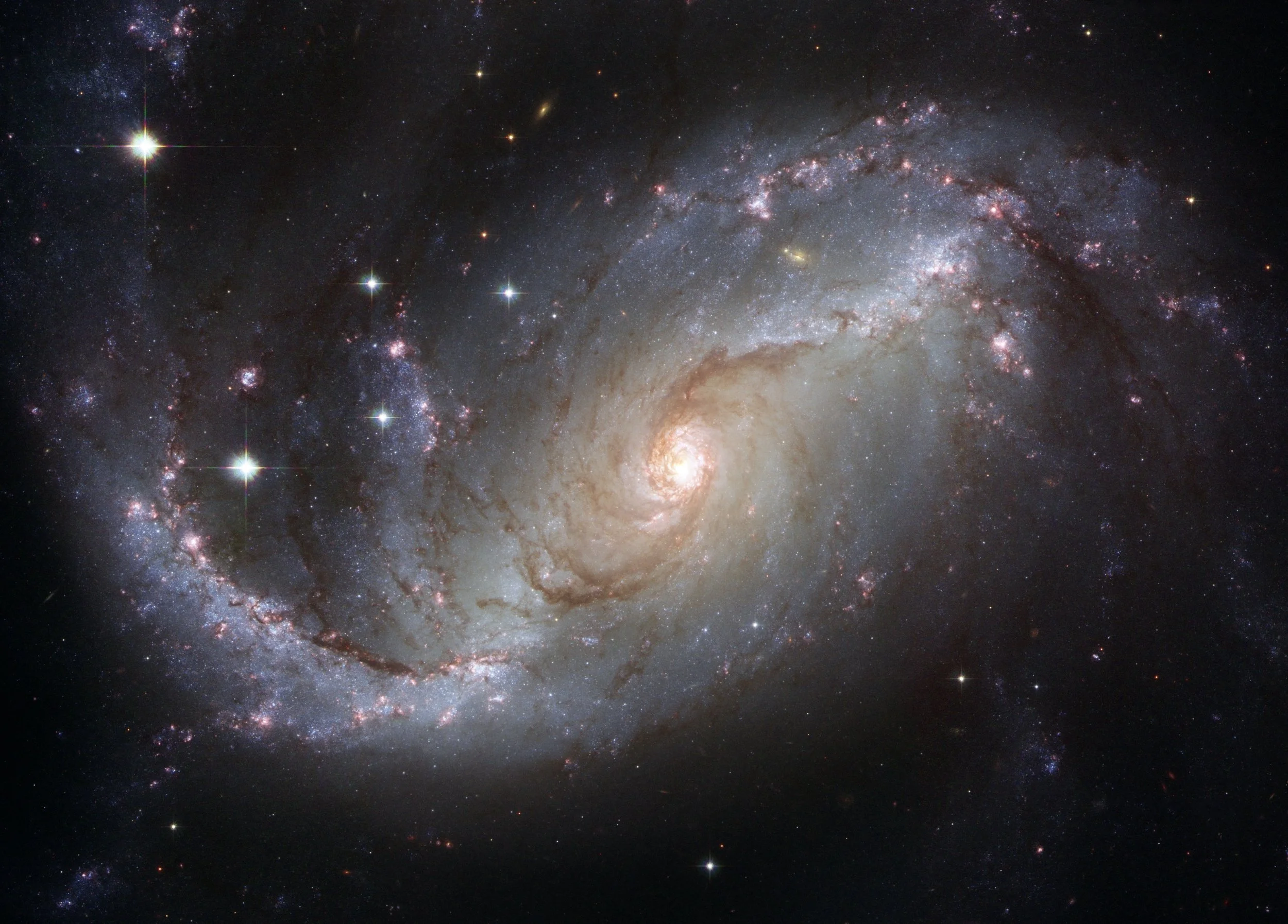
“Thus declares The Lord, who stretched out the heavens and founded the earth and formed the spirit of man within him…” Zechariah 12:1
You know the Lord is about to drop science when he introduces himself like this. He is the Craftsman of our realm—and let the realm never forget it!
Check the technique of his workmanship: he stretched, he founded, he formed. The skies above he stretched out like a tent. The stars too. The earth below he founded like a rock. And us he formed, a wondrous blend of the two.
Our souls are heaven-born; let mind and heart expand, in the knowledge and love of God, who is in heaven. Our bodies are earth-born; may flesh and blood ground us, keeping us humble in our earthly duties. And thus we will image God, and imprint his celestial beauty and order and love onto the cosmos.
And yet we have failed at this. Badly. So God came down and did it for us. Trust him today, and he will save you from your cosmic failure to reflect his glory, and he will help you begin to do it yourself, too.
The Reason for Being
What is the chief end of man? So goes Q1 of the Westminster Larger Catechism (I’m paraphrasing). Answer: To glorify God and enjoy him forever. That’s why we exist, to make much of God and bask in the rays of his infinite splendor.
This God of whom we speak is Triune, and his Triune nature helps us understand why we exist. In the Trinity (that great Mystery) there are Three divine Persons eternally existing in and as the One God. These eternal relations of procession are reflected in the way God works in and through his creation. All created things have their being from God the Father, in God the Son, and by God the Spirit, even in their fallen state. In salvation, the Father sends the Son to win our salvation for us. The Father and Son then send the Spirit to apply our salvation to us. In doing so, the Spirit glorifies the Son, and the Son in turn glorifies the Father, directing all things back to him. In salvation, all things return to the Father, by the Spirit and in the Son.
And that’s why you exist. To turn back to your Maker. To turn all the things he sends your way back to him in praise and thanksgiving. That’s why your today exists, to move everything under your influence back to him. This is the reality. Get swept up in the Trinitarian glory right now by trusting the Father to forgive your sins through the death of his Son, by the power of his Spirit, to the praise of his eternal glory, and he will wash your sins away and embrace you forever and ever.

Paul as Mr. Mom
We are currently in 1 Thessalonians in family worship. In last night’s reading the following verse stuck out to me:
But we were gentle among you, like a nursing mother taking care of her own children (1 Thessalonians 2:7).
Here Paul compares himself to a new mommy. Not that he was or could be, but to these new believers he was like that, for he was as tenderly compassionate and delicately nurturous to them as the nursing mother is to her tiny newborn. How cautiously and carefully does she make every move, lest she disturb or upset the nursing little one! That’s how Paul acted toward these believers. (Boy was the apostle secure in his manhood!)
It is even a comparison that God uses for himself:
Can a woman forget her nursing child, that she should have no compassion on the son of her womb? Even these may forget, yet I will not forget you (Isaiah 49:15).
As does Christ, speaking to cosmic rebels:
How often would I have gathered your children together as a hen gathers her brood under her wings (Matthew 23:36).
Turn to Jesus today and you will find him infinitely strong to save you and also supremely gentle to care for you now and always. For he is as tender—no, he is infinitely more tender than the best mother could ever possibly be. After all, our sweet moms are a loving expression to us of the kindness of him who lives forever and ever.

On the Omnipresence of God
Where is God? So reads Question 13 of the children’s catechism we use at home. Answer: God is everywhere. It’s the kind of idea that kids really love to puzzle over. Let’s be honest, it’s the kind of idea we all love to puzzle over! How can God be everywhere all at once? The question leaves us bewildered in wonder at the mysteries of the living God.
One thing we can say is that God is everywhere because he created everywhere and keeps it (and everything in it) in existence at all times. Hebrews tells us that he “upholds the universe by the word of his power” (1:3)—he is doing so right now and always. So he is there, wherever there is, holding the very shape of reality together by his infinite power and wisdom.
God is outside creation. He transcends it, dwelling beyond space and time and all the other things and places he has created (including heaven). And yet he permeates his creation. It is rich with his presence. He is the hidden power at the very source of the being of everything that exists. Because of this, God is intimately close to everything and everyone that exists. As Paul said, “He is actually not far from each one of us, for ‘In him we live and move and have our being’” (Acts 17:27-28).